Photo search quote
Have a product photo? Send it for a supplier quote.
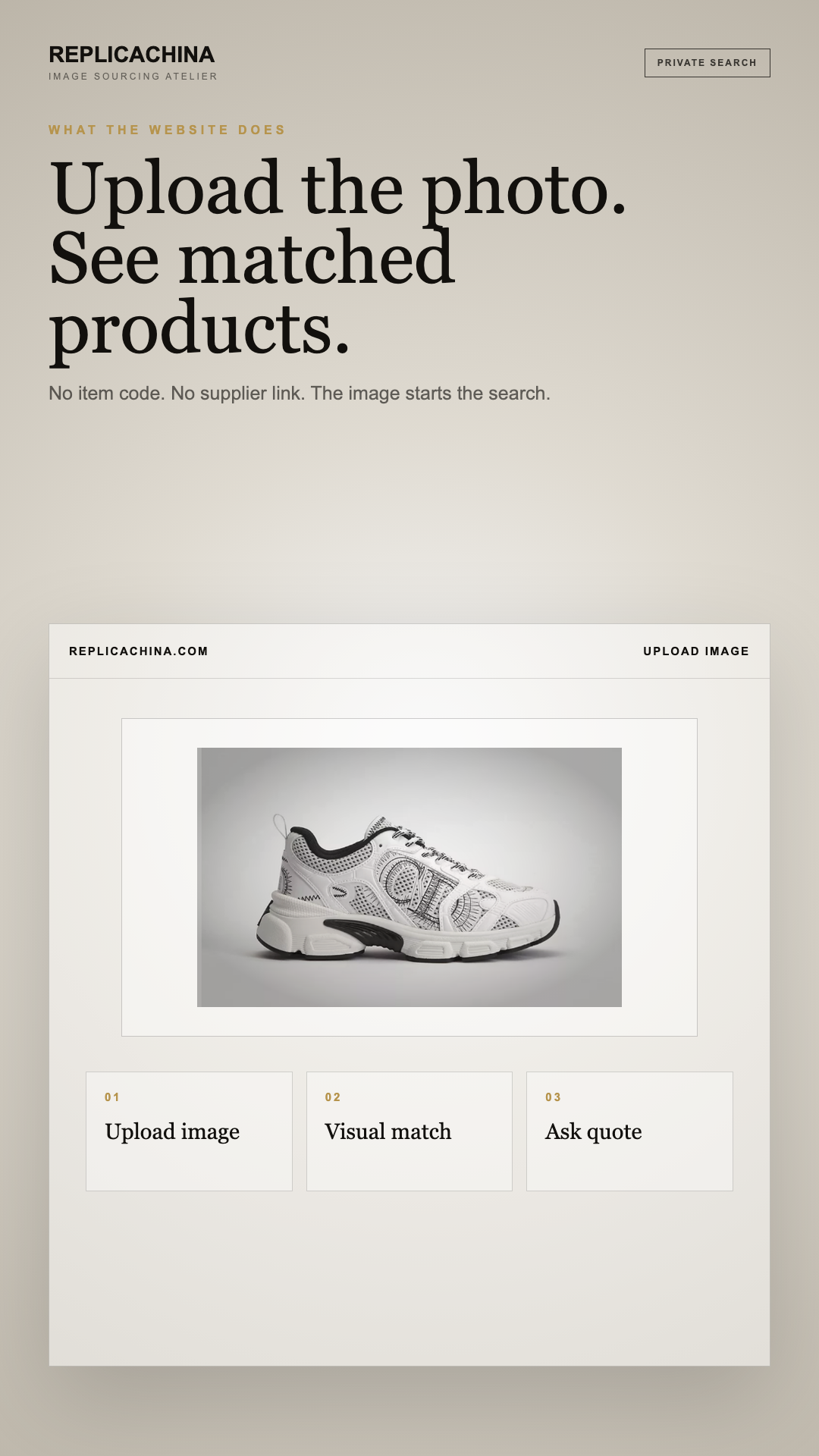
Seen a product you like but do not know where to buy it? Upload the clearest image first, or send the brand reference, model name, SKU, Yupoo link, or social screenshot. We compare exact and close China supplier options, then continue price, quantity, shipping, and after-sales details on WhatsApp.
Any brand or model name identifies the buyer reference only. ReplicaChina does not claim brand affiliation, provenance, permanent inventory, or fixed pricing.
- Image first
- No product name required.
- Supplier check
- Exact match first, close alternatives second.
- Fast quote
- Continue with price and shipping on WhatsApp.
Last updated: 2026-09-02 · Reviewed by the ReplicaChina sourcing team
Direct answer: A streetwear match depends on graphic placement, wash, garment blank, fabric weight, drop fit, limited-run evidence, and current decoration. The evidence trail starts with one concrete action: Map front, back, sleeve, label, and graphic placement. Use album pages as visual references for streetwear; confirm the current item, seller, and commercial terms outside the image match.
Independent-use notice: ReplicaChina is independent and is not affiliated with, endorsed by, or operated by Yupoo or any other platform named here. Names and trademarks belong to their respective owners. Album references identify a buyer request only; confirm product legality, rights, seller identity, and transaction terms for the destination.
The search becomes actionable only when the garment reference, current option, and independent counterparty stay connected.
Map graphics and garment proportions
Streetwear matching often depends on the relationship between the garment blank and its decoration. Capture full front and back, graphic boundaries, distance from neckline and seams, sleeve artwork, label placement, hem, and overall drop. Add chest, shoulder, length, sleeve, and hem measurements to describe the intended oversized, cropped, or regular fit. A familiar graphic alone is insufficient because placement, scale, wash, and garment proportions can change the entire result. Keep all names and images as neutral search references without claiming affiliation.
Document wash and decoration as processes
Photographs can reveal visible wash variation, fading, distressing, print texture, embroidery position, and appliqué edges, but they cannot establish the exact process, ink system, fiber content, or durability. Ask the seller to describe decoration method and garment treatment, then label those statements as claims. Current-option images should show color and finish under neutral lighting where possible. Do not promise that a print will survive a particular number of washes unless supported by appropriate testing and care evidence.
Handle drops and limited availability carefully
Streetwear albums may retain older drops, concept images, or sold-out references, so publication date and album visibility do not prove current availability. Record the requested graphic, color, size, and approximate release context only as identification clues. Ask for a dated current-option response and distinguish ready stock, made-to-order, preorder, and unavailable status when the counterparty states it. Never invent scarcity, countdowns, remaining quantities, or buyer demand. A documented no-current-option result is still a useful outcome.
Capture the requested option before comparison
Preserve the uncropped original and the deepest source URL, then capture garment shape, graphic placement, wash, fabric texture, labels, stitching, measurements, and color. For the garment, add a scale reference, visible code, requested option, quantity, destination, and acceptable differences. The six fields below describe how to keep visual clues tied to the same garment without turning appearance into a material, safety, provenance, or durability claim.
- Garment Shape: Use a level, uncropped view of the garment shape with enough scale and context to identify the same garment in later seller evidence.
- Graphic Placement: Keep the full graphic placement visible, note lighting and editing, and compare that view with dated evidence for the quoted option.
- Wash: Photograph the wash in neutral light at both detail and whole-item distance; appearance alone remains a visual clue, not a composition test.
- Fabric Texture: Photograph the fabric texture in neutral light at both detail and whole-item distance; appearance alone remains a visual clue, not a composition test.
- Labels: Take a sharp close view of the labels and keep every visible character with the full-item photograph.
- Stitching: Capture the stitching in a focused detail view and a full garment view, then mark any must-match feature before searching.
Resolve composition, quantity, and route separately
Compare fit profile, graphic detail, fabric weight, size curve, stock, and test quantity on the same variant, measurement basis, quantity, packaging, destination, shipping basis, and return assumption. If the exact garment reference is unavailable, identify every changed attribute and ask the buyer to approve the alternative explicitly.
- Fit Profile: Describe the intended slim, regular, relaxed, or oversized cut and support it with garment measurements.
- Graphic Detail: Record the graphic process, placement, dimensions, colors, and current close-up evidence.
- Fabric Weight: Record the stated fabric weight in GSM or another defined unit and identify its source; keep fiber composition separate.
- Size Curve: List the available sizes and their key measurements for the selected current option.
- Stock: Confirm the requested graphic, color, and size are available and record the date.
- Test Quantity: State the smallest sample quantity, its unit price, lead time, and how repeat-order terms differ.
Checklist
- Map front, back, sleeve, label, and graphic placement.
- Record fit measurements and the intended silhouette.
- Separate visible wash and decoration from process claims.
- Request dated availability for the exact size and color.
- Never invent scarcity, drop status, or remaining quantity.
Sources
- Yupoo Help — Quick Search: Finding visual references inside album categories.
- FTC — Clothing and Textiles: United States context: Fiber, origin, and labeling statements. Buyers elsewhere should check the corresponding destination authority.
- FTC — Care Labeling Rule: United States context: Care claims and reasonable supporting basis. Buyers elsewhere should check the corresponding destination authority.
These references support the method; they do not certify a current offer or transfer protection to another route.
Frequently asked questions
Which details define a streetwear match?
Record garment silhouette, fit measurements, fabric-weight claim, wash, graphic scale and placement, embroidery or print method, labels, seams, and color. A shared graphic does not establish that the blank, construction, sizing, or finish matches the requested reference.
Can photos confirm print durability?
No. Photos can show current visible texture and condition, not future wash performance. Ask for decoration method, care instructions, and any relevant test basis. Avoid promising durability from an album image or a generic seller statement.
How should an oversized fit be measured?
Use flat garment measurements for chest, shoulder, body length, sleeve, and hem, together with the stated size and tolerance. Compare with a known oversized garment. The word oversized alone does not define how much room or drop the item provides.
Does an old album post mean a drop is still available?
No. It may remain as an archive or visual reference. Record its date, then ask for a current response tied to the requested size, color, and graphic. Mark the result unavailable or unknown if current evidence is not provided.
How should graphic differences be approved?
Use a side-by-side map showing scale, position, spacing, color, edge, and technique differences. Classify each as required, acceptable, or rejected. A buyer should approve an alternative explicitly rather than discovering after payment that the graphic moved or changed.
Next step
Use your dated image or deepest item URL. Use one request ID so a changed image, contact, recipient, or shipping basis cannot pass unnoticed.
Related guidance
- Find a supplier from a Yupoo photo reference
- Yupoo Clothing Search: Measurements, Fabric, and Variant Checks
- Yupoo Watch Albums: What Photos Can and Cannot Verify
- Yupoo Cap Search: Crown Shape, Closure, and Fit Range
- How To Order By Photo
- Shipping, payment, and WhatsApp
Photo search quote
Have a product photo? Send it for a supplier quote.
Seen a product you like but do not know where to buy it? Upload the clearest image first, or send the brand reference, model name, SKU, Yupoo link, or social screenshot. We compare exact and close China supplier options, then continue price, quantity, shipping, and after-sales details on WhatsApp.
Any brand or model name identifies the buyer reference only. ReplicaChina does not claim brand affiliation, provenance, permanent inventory, or fixed pricing.
- Image first
- No product name required.
- Supplier check
- Exact match first, close alternatives second.
- Fast quote
- Continue with price and shipping on WhatsApp.