Photo search quote
Have a product photo? Send it for a supplier quote.
Seen a product you like but do not know where to buy it? Upload the clearest image first, or send the brand reference, model name, SKU, Yupoo link, or social screenshot. We compare exact and close China supplier options, then continue price, quantity, shipping, and after-sales details on WhatsApp.
Any brand or model name identifies the buyer reference only. ReplicaChina does not claim brand affiliation, provenance, permanent inventory, or fixed pricing.
- Image first
- No product name required.
- Supplier check
- Exact match first, close alternatives second.
- Fast quote
- Continue with price and shipping on WhatsApp.
Last updated: 2026-09-02 · Reviewed by the ReplicaChina sourcing team
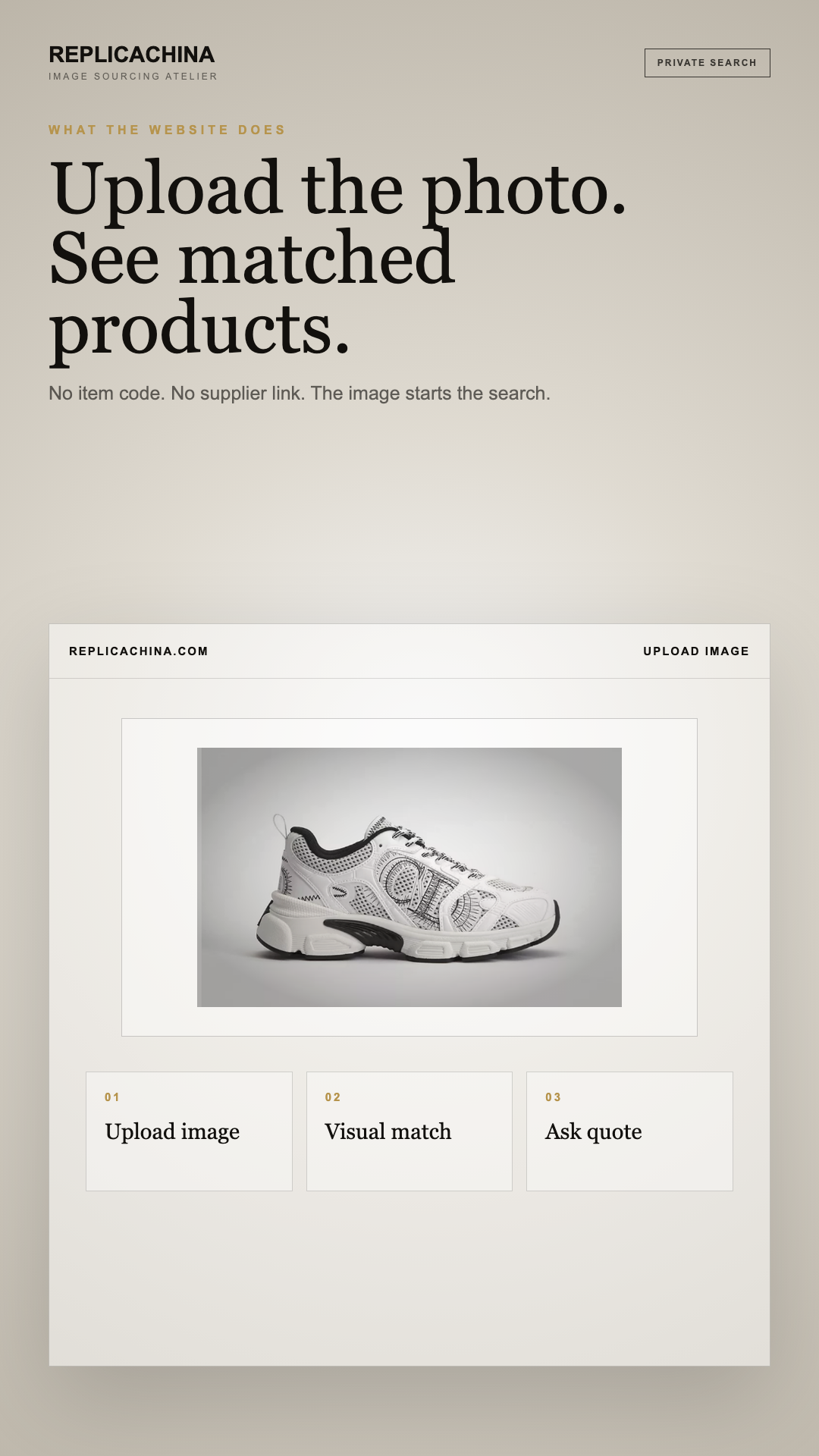
Direct answer: A comparable clothing quote starts with the garment type, fit, fabric, care, decoration, and construction-specific evidence. A usable outcome also depends on this step: Classify garment type, layer, season, and fit profile. Use album pages as visual references for clothing; confirm the current item, seller, and commercial terms outside the image match.
Independent-use notice: ReplicaChina is independent and is not affiliated with, endorsed by, or operated by Yupoo or any other platform named here. Names and trademarks belong to their respective owners. Album references identify a buyer request only; confirm product legality, rights, seller identity, and transaction terms for the destination.
For garment, preserve the original photograph and define the must-match attributes before comparing any offer.
Classify the garment before sourcing
Identify the garment type, intended layer, season, fit profile, and primary construction before comparing candidates. Record front and back, collar or neckline, sleeves, cuffs, hem, closures, pockets, lining, labels, and visible decoration. Shirts, trousers, knitwear, and dresses can use this general garment record. Jackets, hoodies, tracksuits, and streetwear need additional measurements for their own closures, panels, insulation, set components, or decoration. Clear classification keeps every quote tied to the correct construction and fit requirements.
Create a measurement map for the garment
Garment fit depends on measurement points, not only a labeled size. Define chest or bust, shoulder, body length, sleeve, waist, rise, inseam, hem, or other relevant points and state whether the item was laid flat. Record units and tolerance, then compare with a known garment that fits. Distinguish a seller chart from a current-item measurement. Do not guarantee fit, because fabric stretch, cut, layering, and individual preference can change how identical measurements feel.
Verify labels and care claims separately
Images may show texture, weave, knit, print, embroidery, and visible labels, but they cannot prove fiber percentages, origin, care performance, or chemical properties. Capture any seller-provided fiber and care statements exactly and identify whether they come from a label, document, or message. Resellers must check the labeling obligations in their destination market. Collect evidence without presenting an album caption as certification or using appearance to infer protected brand relationships, composition, or regulatory compliance.
Separate whole-item views from decisive close-ups
Preserve the uncropped original and the deepest source URL, then capture front, back, label, fabric texture, seams, print, color, measurements, and size chart. For the garment, add a scale reference, visible code, requested option, quantity, destination, and acceptable differences. The six fields below describe how to keep visual clues tied to the same garment without turning appearance into a material, safety, provenance, or durability claim.
- Front: Use a level, uncropped view of the front with enough scale and context to identify the same garment in later seller evidence.
- Back: Use a level, uncropped view of the back with enough scale and context to identify the same garment in later seller evidence.
- Label: Take a sharp close view of the label and keep every visible character with the full-item photograph.
- Fabric Texture: Photograph the fabric texture in neutral light at both detail and whole-item distance; appearance alone remains a visual clue, not a composition test.
- Seams: Capture the seams in a focused detail view and a full garment view, then mark any must-match feature before searching.
- Print: Keep the full print visible, note lighting and editing, and compare that view with dated evidence for the quoted option.
Tie each seller answer to the selected variant
Compare fabric, measurement method, size tolerance, color, MOQ, and production or stock basis on the same variant, measurement basis, quantity, packaging, destination, shipping basis, and return assumption. If the exact garment reference is unavailable, identify every changed attribute and ask the buyer to approve the alternative explicitly.
- Fabric: Record the stated fiber composition, fabric weight, knit or weave, and source of the claim.
- Measurement Method: State whether the garment was laid flat, which points were measured, whether widths were doubled, and which units were used.
- Size Tolerance: Record the permitted variance for each key measurement and the batch it applies to.
- Color: Identify the selected color and compare it with current images captured under neutral lighting.
- MOQ: State the minimum units per style, color, and size and whether variants may be mixed.
- Production or Stock Basis: Label the option ready stock, made to order, preorder, or unavailable and record its lead time.
Checklist
- Classify garment type, layer, season, and fit profile.
- Capture construction, closures, pockets, lining, labels, and decoration.
- Define measurement points, method, units, and tolerance.
- Separate seller charts from current-item measurements.
- Record fiber, origin, and care statements as claims with sources.
Sources
- Yupoo Help — Quick Search: Category and image discovery for garment references.
- FTC — Clothing and Textiles: United States context: Fiber content, origin, and apparel labeling context. Buyers elsewhere should check the corresponding destination authority.
- FTC — Care Labeling Rule: United States context: Reasonable basis and disclosure for garment care instructions. Buyers elsewhere should check the corresponding destination authority.
Check the original source and its jurisdiction before applying it to a different transaction or destination.
Frequently asked questions
Which items belong in a general clothing request?
Use this record for shirts, trousers, knitwear, dresses, and other general garments. Jackets, hoodies, tracksuits, and streetwear need extra evidence for their distinct fit, panels, closures, set components, insulation, or decoration. In every case, preserve measurements, fiber claims, care wording, and the selected current option.
Which measurements should a clothing request include?
Choose points appropriate to the garment: chest or bust, shoulder, length, sleeve, waist, rise, inseam, and hem as needed. State whether measurements are flat, units used, and tolerance. Compare with a known garment rather than relying on size labels.
Can a photo prove fabric composition?
No. Texture and drape are visual clues, not fiber analysis. Record the seller’s composition wording and request accurate label or documentary evidence where it matters. Do not turn appearance into a cotton, wool, silk, recycled-content, or origin claim.
How should stretch be described?
Use measured or documented information such as fiber content, stretch direction, relaxed dimensions, extended dimensions, and recovery where available. Avoid vague promises such as very stretchy. If no method or evidence exists, state that stretch behavior remains unverified.
What should a clothing alternative disclose?
List differences in garment type, cut, measurements, fabric claim, color, decoration, lining, closures, and care information. Keep the alternative on a separate comparison row and require buyer acceptance. Similar appearance does not make two garments interchangeable.
Next step
Send the preserved product reference. Ask the respondent to name the item, role, price basis, route, and responsibility in writing.
Related guidance
- Find a supplier from a Yupoo photo reference
- Search Yupoo Bags by Photo: Dimensions and Hardware Checklist
- Find Streetwear on Yupoo: Graphics, Fit, and Fabric Guide
- Yupoo Sandal Search: Footbed, Strap, and Width Checks
- How To Order By Photo
- Shipping, payment, and WhatsApp
Photo search quote
Have a product photo? Send it for a supplier quote.
Seen a product you like but do not know where to buy it? Upload the clearest image first, or send the brand reference, model name, SKU, Yupoo link, or social screenshot. We compare exact and close China supplier options, then continue price, quantity, shipping, and after-sales details on WhatsApp.
Any brand or model name identifies the buyer reference only. ReplicaChina does not claim brand affiliation, provenance, permanent inventory, or fixed pricing.
- Image first
- No product name required.
- Supplier check
- Exact match first, close alternatives second.
- Fast quote
- Continue with price and shipping on WhatsApp.